Yacht Charter in the Saronic Gulf: Sailing from Athens
The Saronic Gulf is where most people start chartering in Greece. Alimos Marina has about 1,100 berths and a dedicated charter village, and is described as the largest marina in Greece (Greek Marinas). It is 35–50 minutes from Athens airport by road. Legs between islands are short, so a beginner crew can sail a full week with no long open-water passage. The trade-off: it is a well-worn circuit. In high season you share it with flotillas and other charter boats, so timing your arrivals matters. It is also the easiest way into a yacht charter in Greece for a first-time crew.
Key takeaways
- The standard first-week route from Athens: short legs and no long open-water crossing.
- Alimos, the largest marina in Greece, is 35–50 minutes from Athens airport.
- Reach Hydra by about 13:00 in high season; Mandraki bay is the backup.
- The main challenge is crowding, not wind: the meltemi is much weaker here than in the Cyclades.
Who the Saronic suits
First bareboat weeks, families, and anyone with a short holiday who wants to start sailing the day they land. Not the best choice if you want empty anchorages in August. Bareboat skippers should check the licence requirements before booking.
A 7-day Saronic Gulf sailing itinerary from Alimos
Total distance about 160 nautical miles including the Argolic detour, or about 85 nautical miles for a pure-Saronic loop that skips Nafplio.
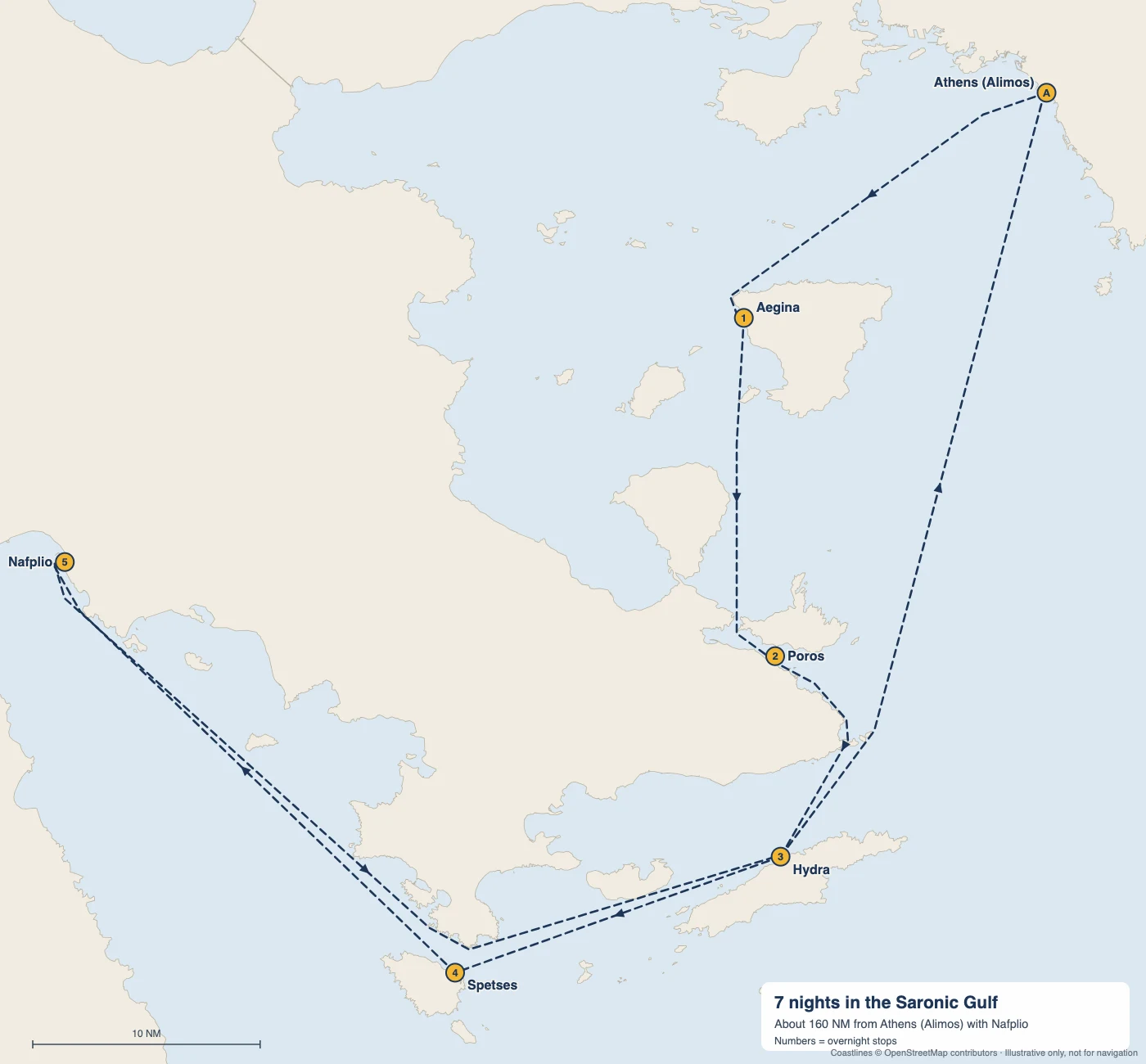
Day 1: Alimos to Aegina (about 18 NM). Provision at the marina supermarket before you leave. Aegina town harbour fills by early evening; the free anchorage at Perdika, about 4 NM south, is the fallback.
Day 2: Aegina to Poros (about 16 NM). The Poros channel is about 200 metres wide and sheltered even in strong weather, with neoclassical buildings on both sides. Stern-to on the town quay or on mooring buoys.
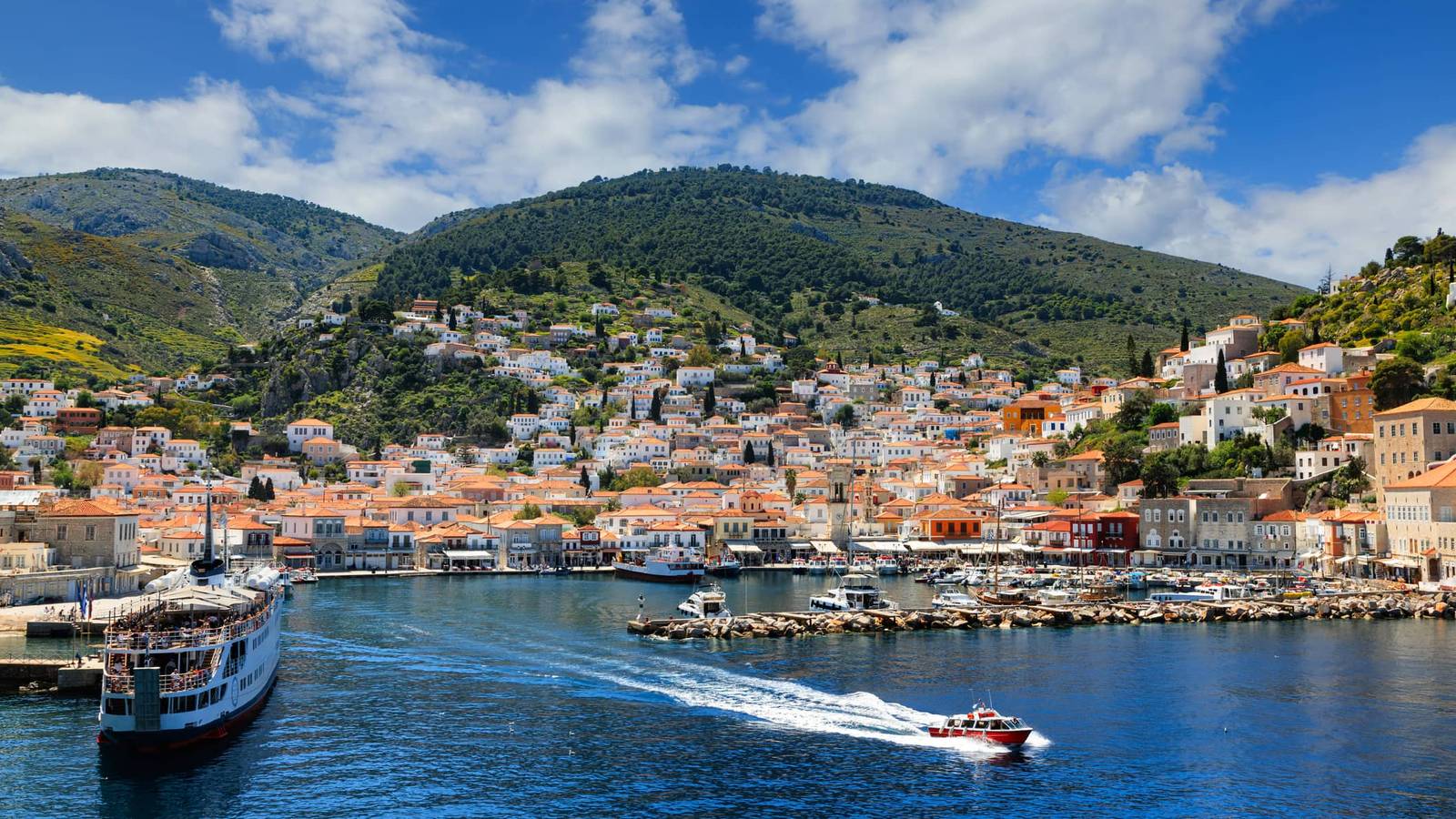
Day 3: Poros to Hydra (about 12 NM). Often the best sail of the week, with the wind on the beam. Aim to be in Hydra harbour by about 13:00; after that, charter boats queue at the entrance. Hydra bans cars, so ashore everything moves on foot, by donkey or by water taxi (National Geographic). Mandraki bay, about 1 NM east, is the backup.
Day 4: Hydra to Spetses (about 15 NM). Bigger harbour with easier mooring than Hydra, and a distinctive old-town waterfront.
Day 5: Spetses to Nafplio (about 26 NM). A long leg, usually downwind. Leave around 09:00. Nafplio is the prettiest town on this stretch of the Peloponnese.
Day 6: Nafplio back to Hydra (about 40 NM, the longest day of the week: leave early), or break it with a night in Porto Cheli or Ermioni.
Day 7: Hydra to Alimos (about 36 NM). Aim to arrive by mid-afternoon; refuel at the Alimos fuel dock before docking.
Fuel is available at Alimos, Poros and Spetses, not Hydra. Provision before you reach Hydra: supermarkets are close to most harbours, but you will not want to be shopping in the queue.
What it costs
Marina and harbour fees in the region typically run €30–€80 a night. As a rough guide, a 45 ft monohull shared by six people works out at around €1,300 per person for the week, including charter fee, food and harbour fees. Charter fees follow the same seasonal pattern as the rest of Greece; see our cost page for the full breakdown.
Wind and conditions
The Saronic is much more forgiving than the central Cyclades. The meltemi still reaches the Saronic in summer, but it is far less severe, and most legs are short. The main challenge is not weather but congestion. Check the EMY marine forecast each morning all the same.
Catamarans in the Saronic
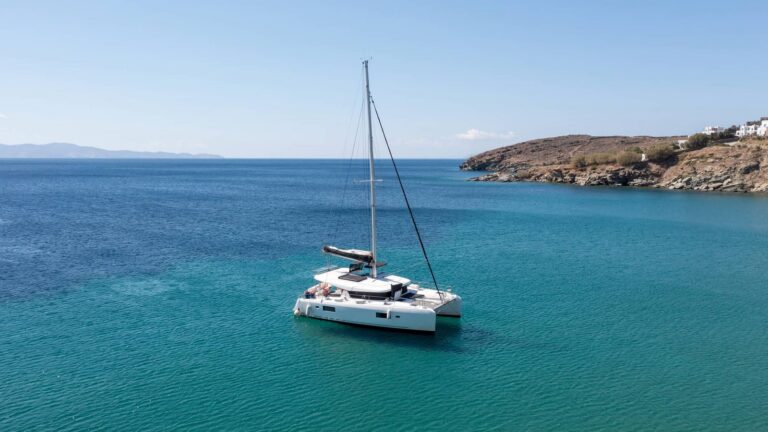
The Saronic and the Ionian are where Greece’s catamaran fleet is concentrated (see our catamaran vs monohull guide). One caveat: Hydra’s stern-to mooring needs extra care for a wide boat, so arrive early and be ready to use your tender at Mandraki if the quay is full.
Recommended reading
- Greek Waters Pilot (Imray, Rod and Lucinda Heikell, 15th edition, 2025): the standard harbour-by-harbour guide to Greece, with plans of most anchorages and town quays.
Links go to Amazon. As an Amazon Associate I earn from qualifying purchases.
Getting to the marina
Saronic Gulf charters start from the Athens marinas of Alimos or Lavrion. Book the airport transfer before you fly so the driver meets you at arrivals: transfers from Athens airport to the marina.
Frequently asked questions
How long does it take to sail from Athens to Hydra?
About three days. The route is roughly 45 nautical miles in three legs: Alimos to Aegina, Aegina to Poros, then Poros to Hydra.
Is the Saronic Gulf good for a first yacht charter?
Yes. Legs are short and anchorages are close together, which makes the Saronic Gulf the standard first-week route for charters from Athens.
Is the Saronic Gulf too crowded in August?
It is busy. Arrive early at Hydra and Aegina, or choose a shoulder-season week for a quieter trip.
Can you sail from Athens to the Cyclades instead of the Saronic?
Yes, from Alimos or Lavrio, but it adds one or two days of open-water sailing each way. See our 7-night Cyclades itinerary and our guide to charter bases.
Sources
- Greek Marinas Association, Alimos Marina.
- National Geographic, How to explore the car-free island of Hydra, Greece.
- Hellenic National Meteorological Service (EMY), forecasts and warnings.
- Distances and route maps by Yacht Charter Guide on OpenStreetMap coastlines (© OpenStreetMap contributors).
- All links checked on 1 November 2026.