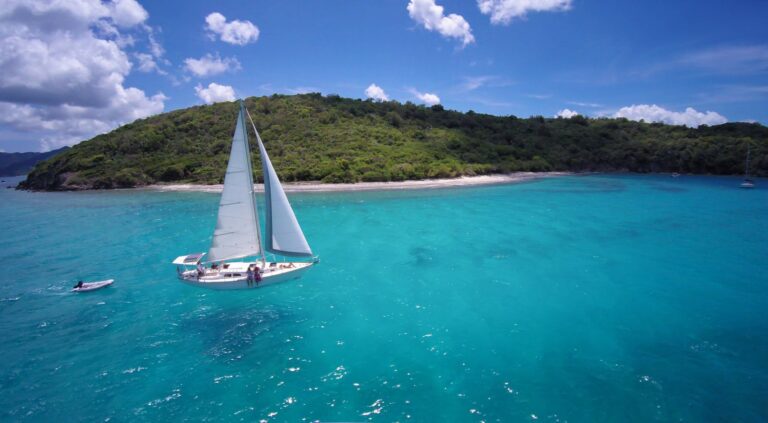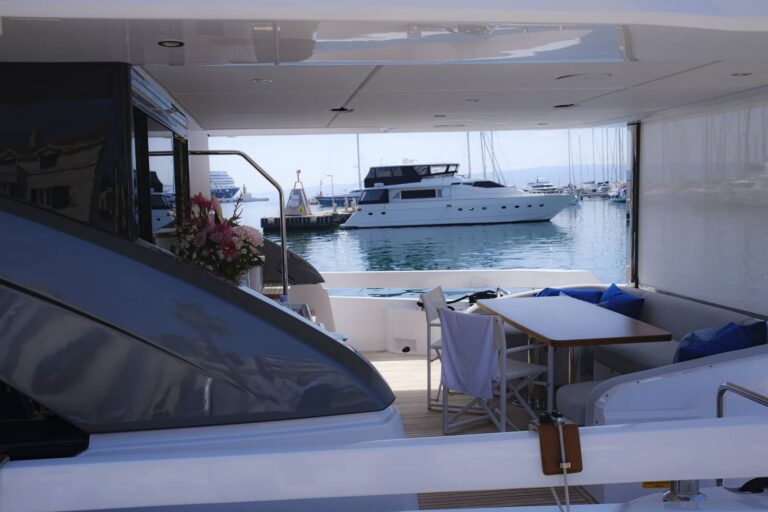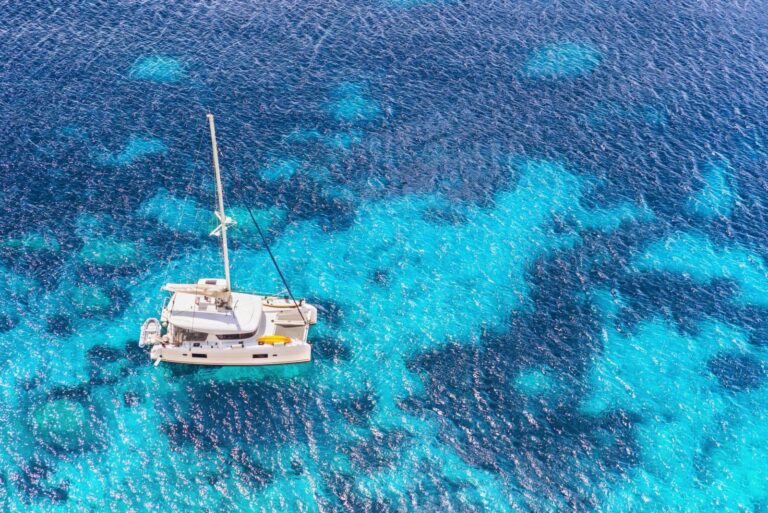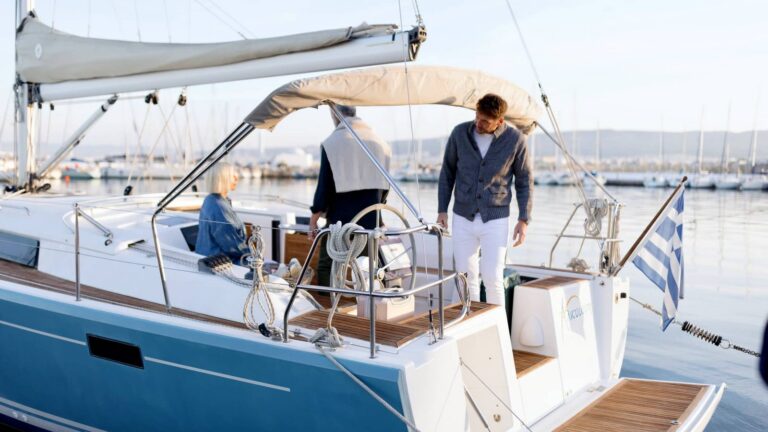
A yacht charter means renting a boat for your holiday, usually by the week. You either sail it yourself (a bareboat charter, which needs a licence), hire a skipper to sail it for you, or book a fully crewed yacht with a skipper and cook. Prices start from around €1,000 a week for a small sailing yacht in low season and climb past €55,000 for a crewed superyacht, before extras such as fuel, moorings and VAT.
Our yacht charter guides are organised by the questions you need to answer, in the order you need to answer them: how chartering works, which type of charter and boat to choose, what it really costs, which licence you need, how to plan and book, and what to expect on board. Each section gives you the short answer, with links to our detailed guides.
- How it works
- Charter types
- Choosing a boat
- Costs and budget
- Licences
- Planning and booking
- On board
- Glossary
- FAQ
How does a yacht charter work?
Most charters follow the same six steps, wherever you sail.
- Choose the destination and the season. The Mediterranean from May to October, the Caribbean from December to April. Our destinations guide compares them.
- Choose the type of charter. Bareboat, flotilla, skippered or crewed, depending on your experience and the service you want.
- Choose the boat. A monohull for value and real sailing, a catamaran for space and stability, a motor yacht for speed.
- Book. Usually a deposit when you book and the balance a few weeks before departure.
- Send the paperwork. The crew list and, for bareboat, the skipper’s licence and sailing experience.
- Sail. In the Mediterranean, check-in is usually on Saturday afternoon and the boat goes back on Friday evening.
Which type of yacht charter is right for you?
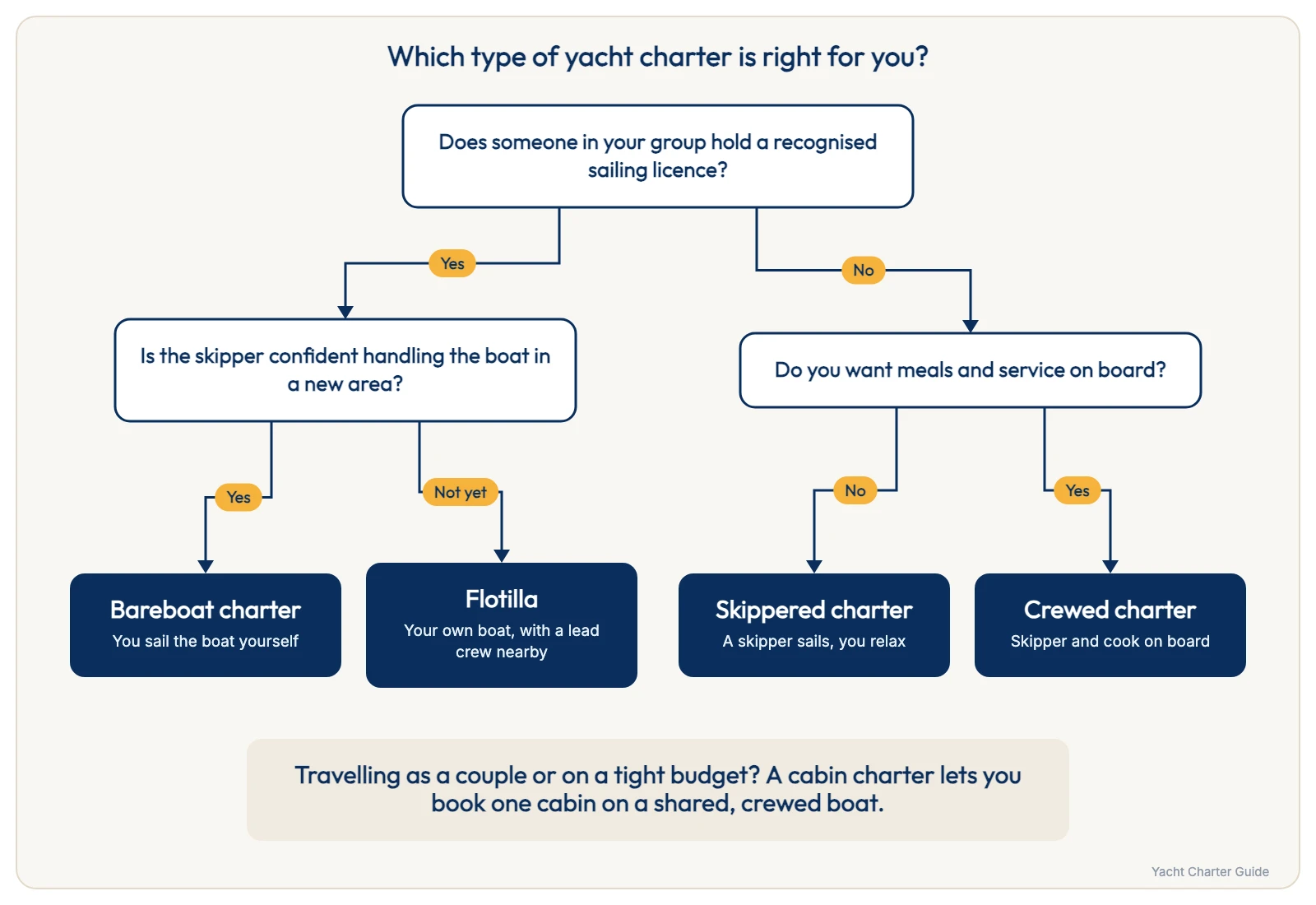
| What you get | Licence needed | Best for | |
|---|---|---|---|
| Bareboat | The boat only; you sail, cook and navigate | Yes, plus usually a second crew member | Experienced sailors, the lowest price |
| Flotilla | Your own boat, sailing with a group and a lead crew | Usually basic skippering skills | Improvers, families, a first sailing holiday |
| Skippered | A professional skipper; you handle the rest | No | Beginners, mixed groups |
| Crewed | Skipper plus hostess or cook; meals prepared on board | No | Relaxing holidays, larger groups, luxury |
| Cabin charter | One cabin on a shared, crewed boat | No | Couples, solo travellers, smaller budgets |
Read next: Bareboat vs crewed charter: the real cost · Bareboat charter in Greece · Sailing holidays: flotilla, skippered or bareboat?
Choosing a boat
| Strengths | Trade-offs | Best for | |
|---|---|---|---|
| Sailing monohull | Best value per berth, the most rewarding to sail | Heels under sail, tighter cabins | Couples, sailors, budgets |
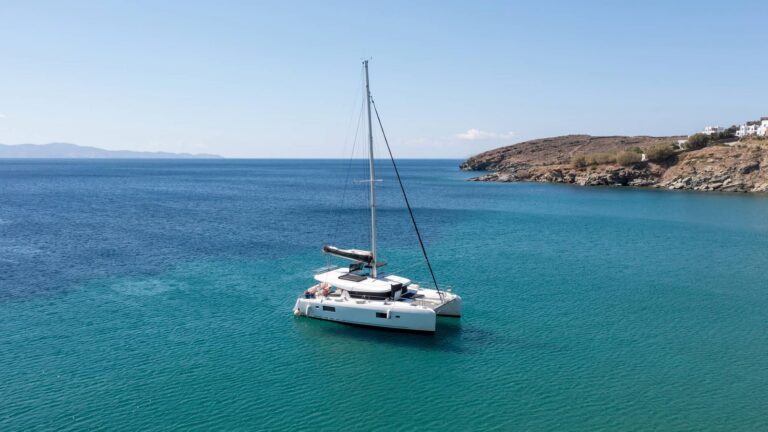
| Sailing catamaran | Space, stability, private cabins, shallow draft | Costs roughly one and a half to two times a monohull; higher marina fees | Families, groups of 6–10 |
| Motor yacht | Speed and range, ideal for short trips | Fuel is a major cost | Island hopping on a tight schedule, day charters |
| Gulet | Traditional wooden yacht with a full crew and big deck space | Sails mainly under engine | Groups wanting a crewed, relaxed cruise |
| Superyacht | Full crew, toys and luxury service | From tens of thousands of euros a week | Luxury charters, events |
Read next: Catamaran vs monohull · Catamaran charter in Greece
How much does a yacht charter cost?
The weekly charter fee depends on the boat, the season and the destination: high season can cost twice the low season for the same boat, and a catamaran costs roughly one and a half to two times a monohull of the same length. Then come the extras.
| What it is | Typical amount | |
|---|---|---|
| Security deposit | Refundable guarantee against damage, or a non-refundable damage waiver instead | €1,000–€6,000 depending on the boat |
| APA (crewed charters) | Advance Provisioning Allowance for fuel, food, drinks and berths; unspent APA is refunded | 25–40% of the charter fee |
| VAT | Charged on charters in most Mediterranean countries | For example 12% in Greece, 20% in France |
| Moorings and fuel | Marina and harbour fees, diesel for the engine and the tender | From a few euros a night on town quays to €250+ in the most famous marinas |
| Skipper | If nobody holds a licence | About €150–€250 a day plus food |
| Crew gratuity | Customary on crewed charters | Typically 10–20% of the charter fee |
Shared by a group, a charter is often cheaper than it looks: a bareboat week in Greece typically comes to €400–€700 per person including food when six people share the boat.
Read next: Yacht charter cost in Greece · Bareboat vs crewed: the all-in comparison
Do you need a licence to charter a yacht?
Only for a bareboat charter. Skippered, crewed, cabin and most flotilla holidays need no qualification, although a flotilla usually expects someone with basic skippering skills.
| What it is | Where it matters | |
|---|---|---|
| ICC | International Certificate of Competence, the most widely accepted licence for bareboat in Europe | Greece, Croatia, Spain and most of the Mediterranean |
| RYA Day Skipper, Coastal Skipper, Yachtmaster | British sailing qualifications | Coastal Skipper and above are widely accepted; Day Skipper depends on the country and the operator |
| ASA 104 Bareboat Cruising | American Sailing Association qualification | Accepted by many operators, especially in the Caribbean |
| VHF radio certificate (SRC) | Licence to operate the boat’s radio | Required on board in Croatia; recommended everywhere |
| Sailing résumé | A list of your experience, boats and sailing areas | Often what Caribbean operators assess |
Read next: Licence requirements in Greece · Croatia: licence and VHF rules
Planning and booking your charter
| Mediterranean | Caribbean | |
|---|---|---|
| Season | May to October | December to April |
| Best months | June and September | January to April |
| Book for peak weeks | 6–9 months ahead (July, August) | 6–12 months ahead (Christmas, New Year) |
| Book for shoulder season | 3–4 months ahead | 2–4 months ahead |
| Avoid | The busiest week of August in Greece | Hurricane season, June to November |
Read next: Best time to charter a yacht in Greece · Where to start a charter in Greece
Life on board: what to expect
- Mooring: in most Mediterranean harbours you moor stern-to, reversing in with your own anchor or a lazy line. In summer, arrive early to find a spot.
- Anchoring: anchor on sand, not on protected seagrass, and use mooring buoys where they exist.
- Provisioning: stock up at the base or order a provisioning pack; smaller islands have limited shops.
- Water and power: fresh water and battery power are limited; marinas let you top up.
- Weather: plan each day around the wind forecast and keep a plan B.
What to pack for a yacht charter
- Soft bags instead of hard suitcases, which do not fit in boat lockers
- Non-marking deck shoes or sandals
- Reef-safe sun cream, a hat and sunglasses with a strap
- A light windproof jacket for evenings and passages
- Original licences, passports and the charter contract
- Seasickness tablets if anyone is prone to it
Yacht charter glossary
| Term | Meaning |
|---|---|
| APA | Advance Provisioning Allowance: money paid upfront on a crewed charter for fuel, food, drinks and berths |
| Bareboat | A charter without crew, where you skipper the boat yourself |
| Berth | A sleeping place on board, or a place to moor in a marina |
| Cabin charter | Booking a single cabin on a shared, crewed boat |
| Catamaran | A boat with two hulls: stable, spacious, with a shallow draft |
| Changeover day | The day boats are handed over, usually Saturday in the Mediterranean |
| Crew list | The list of everyone on board, sent to the operator before departure |
| Damage waiver | A non-refundable fee that replaces or reduces the security deposit |
| Flotilla | A group of charter yachts sailing together with a lead crew |
| Gulet | A traditional wooden motor-sailer, usually chartered with crew |
| ICC | International Certificate of Competence, a widely accepted sailing licence |
| Lazy line | A line fixed to the quay and the seabed, used to moor without dropping anchor |
| Meltemi | The strong summer north wind of the Aegean Sea |
| Monohull | A boat with a single hull: the classic sailing yacht |
| MYBA | The standard contract and terms used for crewed yacht charters |
| Skipper | The person in charge of sailing and navigating the boat |
| Stern-to | Mooring with the back of the boat against the quay |
| Tender | The small dinghy used to reach the shore from an anchorage |
Frequently asked questions
How much does it cost to charter a yacht?
A small bareboat sailing yacht can cost around €1,000 a week in low season, a 42–46 ft catamaran €3,500–€11,000, and a crewed superyacht €55,000 or more. Add fuel, moorings, VAT and, on crewed charters, the APA and a crew gratuity.
What is a bareboat charter?
A bareboat charter is the rental of a yacht without crew: you skipper, navigate and provision the boat yourself. It requires a recognised sailing licence and, in many countries, a second crew member.
Do you need a licence to charter a yacht?
Only for a bareboat charter. Skippered and crewed charters need no qualification. For bareboat, the ICC is the most widely accepted licence in Europe, and some countries such as Croatia also require a VHF radio certificate on board.
Can beginners charter a yacht?
Yes. Beginners can book a skippered or crewed charter, join a flotilla, or take a sailing course on holiday. A sheltered area such as the Ionian Sea in Greece or the British Virgin Islands is the easiest place to start.
What is APA on a yacht charter?
APA stands for Advance Provisioning Allowance. On crewed charters it is paid upfront, usually 25–40% of the charter fee, to cover fuel, food, drinks and berths. The captain keeps the accounts and refunds any unspent amount.
How much should you tip the crew on a yacht charter?
On crewed charters, a gratuity of 10–20% of the charter fee is customary, usually at the higher end in the Caribbean. It is shared among the crew at the end of the trip.
How far in advance should you book a yacht charter?
Six to nine months ahead for July and August in the Mediterranean, and six to twelve months for Christmas in the Caribbean. Three to four months is usually enough for the shoulder season.