Yacht Charter in Greece in July: What to Expect
July is the second most expensive month to charter a yacht in Greece. It is also when the meltemi wind becomes a real factor in route planning. Expect to pay about 10% more than in June for the same boat. Air temperatures sit around 30–33°C, and the wind can hold at 20–30 knots for several days in the central Aegean. This page is part of our guide to yacht charter in Greece. If your dates are flexible, compare with our guide to the best time to charter a yacht in Greece.
Key takeaways
- July averages about €4,400 a week for a sailboat: about 10% above June and 2% below August.
- The meltemi peaks in July and August, with 15 to 25 knots most afternoons in the Cyclades.
- The Ionian and Saronic are the calmer choices for less experienced crews.
- Book by February or March for a specific boat and week.
What a July charter actually costs
Weekly sailboat charter rates in Greece average about €4,400 in July, according to 12 Knots data for about 2,600 boats. That compares with about €4,020 in June, €4,490 in August and €2,240 in January. July costs nearly double the winter price for the same boat.
| Monohull, 35–40 ft (bareboat) | €3,000–4,500 |
| Monohull, 45 ft+ (bareboat) | €4,500–6,500 |
| Catamaran, 42–46 ft (bareboat) | €7,000–11,000 |
| Crewed sailing yacht | €8,000–15,000+ |
Book by February or March if you want a specific boat on a specific week. By June, the best July inventory is largely gone. Full price ranges by season are on our Greece yacht charter cost page.
The meltemi, honestly
The meltemi is the dry north to north-east wind of the Aegean summer. It blows mostly from mid-May to mid-September, and July and August are its peak months, according to a Copernicus climatology study. Check the Hellenic National Meteorological Service forecast every morning. Expect:
- Sustained 15–25 knots most afternoons in the Cyclades, gusting higher around headlands and between islands (the “venturi effect” through channels like the Paros–Naxos strait).
- Mornings often calmer than afternoons: a genuine reason to plan longer passages before midday.
- Multi-day blows are possible but less common than in August. You are more likely to get a mix of strong and moderate days.
This isn’t a reason to avoid July. It’s a reason to sail with an experienced skipper if you’re not confident reefing a sail in 25 knots, and to build slack into your itinerary rather than fixed daily targets.
Where the wind matters less in July
Not every Greek region gets hit the same way:
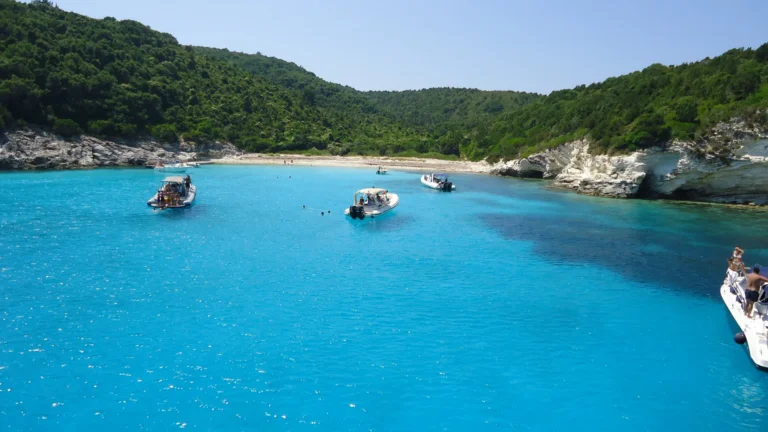
- Ionian Sea (Lefkas, Corfu, Paxos): sheltered by the Greek mainland, so the meltemi barely reaches here. The Ionian’s own wind, the maistro, is a gentler afternoon breeze, typically Force 2 to 5 from June to September.
- Saronic Gulf (near Athens): closer to the mainland, generally calmer than the open Cyclades.
- Central and Southern Cyclades (Mykonos, Paros, Naxos): the most exposed, and where July wind is most likely to actually change your plans.
If you’re nervous about strong wind but set on July dates, the Ionian is the easier choice. August is windier still: see our August yacht charter guide.
What to pack and plan for
- A light jacket for wind chill on deck, even in 30°C air. Apparent wind on a moving boat makes it feel much cooler.
- Flexible daily plans. A route with 2–3 viable anchorages per day beats one with a single fixed destination.
- Water-resistant sun protection. Regular sunscreen washes off fast on an active sailing day.
Recommended reading
- RYA Weather Handbook: a practical guide to reading forecasts, fronts and local winds.
- Acupressure wristbands: a drug-free first defence against seasickness on windy days.
Links go to Amazon. As an Amazon Associate I earn from qualifying purchases.
Getting to the marina
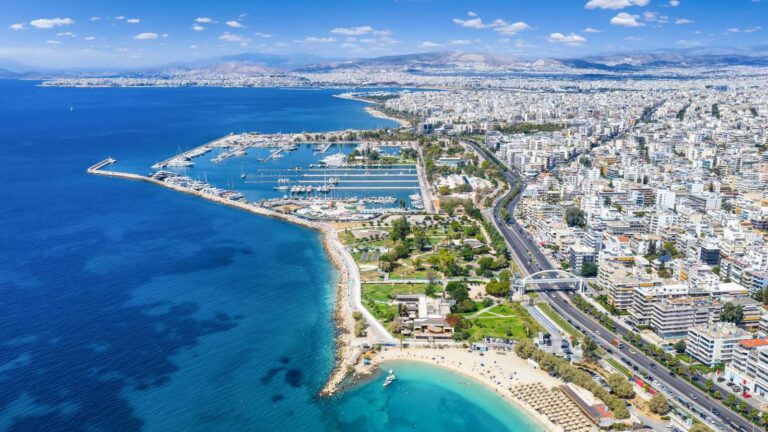
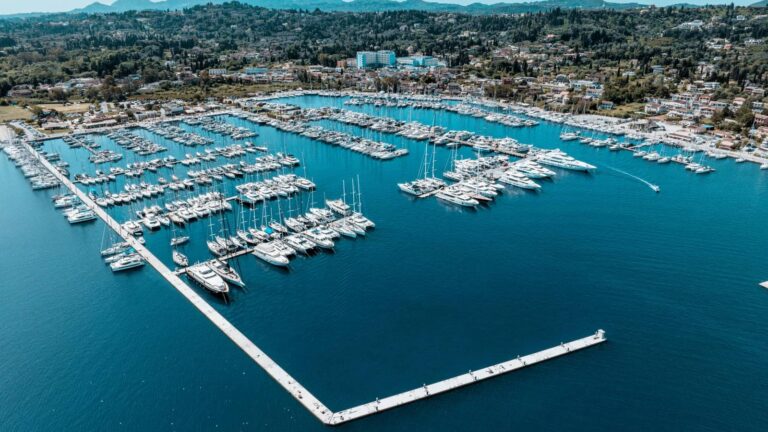
Most bareboat and skippered charters in Greece start from Athens (Alimos or Lavrion), Lefkas or Corfu. Book the airport transfer before you fly so the driver meets you at arrivals: transfers from Athens airport, Preveza airport for Lefkas and Corfu airport.
Frequently asked questions
Is July too windy for a yacht charter in Greece?
Not for an experienced crew or a skippered charter. Beginner bareboat crews should expect some July days when the meltemi dictates the route, especially in the Cyclades. If you are unsure of your skills, choose the calmer Ionian or hire a skipper.
Is July cheaper than August for a yacht charter in Greece?
Not really. July and August prices are close, and July can even run slightly higher week to week depending on the boat and region. Neither is a budget month: for lower prices, look at June or September.
Catamaran or monohull: which is better for a July charter in Greece?
A monohull is generally the more comfortable choice in July, because it handles the meltemi’s chop better in open Cycladic water. A catamaran remains a good option in sheltered, lighter-wind areas such as the Ionian.
How far in advance should I book a July yacht charter in Greece?
Book by February or March if you want a specific boat on specific dates. By June, most of the best July inventory is gone, and last-minute July availability is rare and rarely cheap.
Sources
- 12 Knots, Sailboat rentals in Greece 2027.
- Weather and Climate Dynamics (Copernicus), Misios et al., etesian (meltemi) climatology, preprint wcd-2022-16.
- Hellenic National Meteorological Service (EMY), forecasts and warnings.
- Yachting.com, Typical winds in Greece.
- All links checked on 1 November 2026.