Is It Safe to Sail in Croatia? Winds, Rules and Real Risks
Yes, Croatia is one of the safest places in Europe to sail, and a good first destination for a bareboat charter. The islands are close together, so most legs are 2 to 5 hours with a sheltered harbour never far away; the tidal range is only about 20 to 50 cm; marine forecasts are free and broadcast on VHF in English; and the country has a dedicated sea rescue number, 195. The real risks are a sudden bora, a few days of jugo swell, and, more often than storms, ordinary mistakes in calm weather. This guide explains each one honestly and what to do about it.
Key takeaways
- Summer sailing is mostly gentle: the maestral blows Force 2 to 4 in the afternoon and dies at sunset.
- The wind to respect is the bora: it can arrive within minutes, with gusts far above the average wind, even in summer.
- Check the official forecast on meteo.hr or listen to the coast radio on VHF; broadcasts are in Croatian and English four times a day.
- Emergencies at sea: call 195 (sea search and rescue), 112, or VHF channel 16.
- Most serious accidents happen in calm weather, linked to alcohol, speed and carelessness, not to storms.
Why Croatia is a safe place to sail
- Short hops and plenty of shelter. Croatia had 216 nautical ports in 2025, including 86 marinas and 71 managed anchorages, according to the Croatian Bureau of Statistics. In Central Dalmatia you are rarely more than an hour or two from a safe harbour.
- Almost no tide. The mean daily tidal range is 22 cm in Dubrovnik, 23 cm in Split and 47 cm in Rovinj, according to the Croatian Hydrographic Institute. Strong tidal currents are not a concern.
- Clear water and good charts. The coast is steep-to in most places and well marked, although rocks and shoals around the Kornati need care.
- A safe country ashore. The UK government describes crime levels as low and violent crime as rare, with pickpockets in tourist areas the main issue (FCDO travel advice).
- Warm water. The sea reaches about 24 to 25 °C in August, which makes a fall overboard far less dangerous than in northern waters.
The winds: what to expect and what to respect
| Wind | Direction | Typical strength | When | Risk |
|---|---|---|---|---|
| Maestral | NW, afternoon sea breeze | Force 2 to 4, up to 5 | Summer, from about 10 am, peak around 2 pm, gone by evening | Low: the ideal sailing wind |
| Bora (bura) | N to NE, down from the mountains | Force 5 to 7, gusts much higher | Mostly October to April; summer bora usually lasts 1 to 3 days | High: sudden, gusty, short steep waves |
| Jugo | ESE to SSE | Usually Force 3 to 5 | Mostly spring and autumn, more frequent in the south | Medium: builds over 1 to 2 days, long swell, rain, poor visibility |
The bora
The bora is a cold, dry fall wind that pours down from the coastal mountains. It is strongest under the Velebit range in the north (around Senj, Karlobag and the Velebit Channel), where the record gust reached about 248 km/h at the Maslenica bridge in 1998. Further south it also hits hard around Split, Kaštela Bay and Makarska, and a summer bora can reach Force 9 to 10 in gusts in those spots. Warning signs are a clear sky with a cap of cloud on the mountains and a sudden drop in the maestral. If a bora is forecast, choose a harbour or bay open to the south-west, with the land to the north-east of you, and double your mooring lines.
The jugo
The jugo is a warm, humid wind from the south-east that builds slowly and raises a long swell along the open coast. It is more frequent in Southern Dalmatia and usually lasts about 3 days. It is less violent than the bora but makes south-facing bays and some town quays uncomfortable or unsafe. Plan your night stops on the north side of the islands when it blows.
How to get the forecast
- DHMZ (meteo.hr): the national weather service issues marine forecasts for the North, Central and South Adriatic, updated several times a day.
- VHF coast radio: Rijeka, Split and Dubrovnik Radio broadcast safety information and forecasts in Croatian and English. Split Radio, for example, broadcasts on channels 07, 21, 23, 28, 81 and 84 at 05:45, 12:45, 19:45 and 00:45 UTC (add 2 hours in summer). Full channel list on Plovput.
- Apps: the Ministry’s free nIS app shows forecasts and can share your position with rescuers. Wind models such as Windy or Aladin are useful, but the official forecast is the one that names bora warnings.
- Your charter base: ask at check-in. Local staff know which bays work in which wind.
Emergency numbers
| Number or channel | For |
|---|---|
| 195 | National sea search and rescue centre (MRCC Rijeka), free, 24/7 |
| VHF channel 16 | Distress, urgency and safety calls; channel 70 for DSC |
| 112 | General emergency number, also forwards to sea rescue |
Where the risk really is
Storms make the headlines, but the numbers tell a different story. A study of Croatian search and rescue data for 2010 to 2019 found that recreational craft were involved in about 55% of interventions; motorboats accounted for about 40% of accidents and sailing boats about 32%, with groundings and boats unable to manoeuvre the most common cases and a clear peak in August (Komać et al., Naše more, 2025). Preliminary figures presented in 2026 suggest that about 61% of fatal accidents happened in calm or light winds, with alcohol, speed and carelessness as the main factors (Yacht magazine).
- No alcohol at the helm: Croatia applies zero tolerance to the person in charge of a boat.
- Watch the dinghy: tenders and swimmers in busy bays are a major risk at dusk. Slow down near anchorages and swim areas.
- Navigate on the chart, not by eye: groundings are common, especially among the low islands of the Kornati and Šibenik archipelagos.
- Brief your crew: show everyone the lifejackets, the radio and the man-overboard routine on day one.
Licences and rules
To skipper a charter yacht yourself, you need a licence recognised by Croatia, such as an ICC valid for coastal waters or an equivalent national certificate, plus a VHF radio operator certificate when the boat carries a radio, which charter yachts always do. The Ministry of the Sea publishes the official list of accepted foreign licences. Charter companies check documents at the base, so confirm with yours before booking. If nobody in your group holds a licence, hire a skipper.
Is Croatia good for beginners?
Yes, with the right set-up. Central Dalmatia around Split, Trogir and Šibenik is the usual first choice: short distances, many harbours and a reliable afternoon breeze. Three ways to start safely:
- Hire a skipper for the week, about €150 to €250 a day plus food, and learn from him.
- Join a flotilla, where a lead boat with an experienced crew helps with mooring and route choices.
- Pick a forgiving route, such as our 7-day loop from Split, with legs of 13 to 26 NM, and sail in June or September rather than in the crowded peak.
Even in “easy” Central Dalmatia, a summer bora can hit the Split area, so keep a weather day in your plan. The best time to sail in Croatia guide shows how the winds change month by month, and our yacht charter checklist covers the safety check at handover.
Why sail in Croatia?
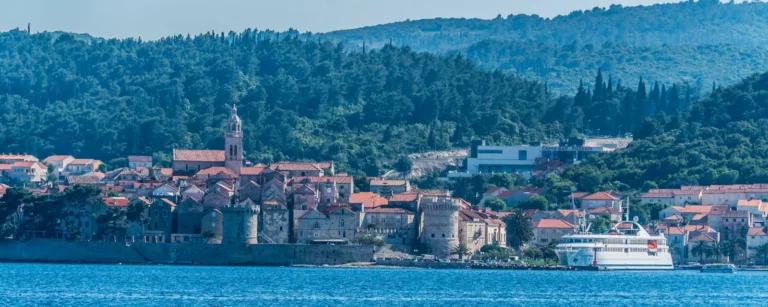
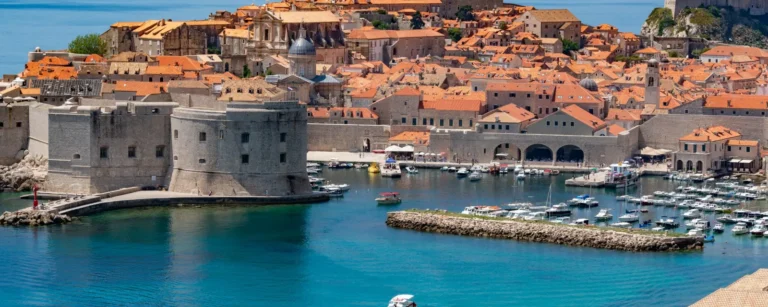
Beyond safety, Croatia is simply a very pleasant place to sail: more than 1,000 islands within a few days of each other, walled towns such as Korčula and Dubrovnik, two marine national parks (Kornati and Mljet), clear water and a dense network of marinas. If you are deciding between destinations, read our Croatia vs Greece sailing comparison.
Recommended reading
- RYA VHF Handbook: everything covered by the SRC radio certificate, which Croatia requires for bareboat skippers.
- RYA Weather Handbook: a practical guide to reading forecasts, fronts and local winds.
- RYA Day Skipper Handbook (Sail): the course book behind the most common charter licence, useful as a refresher before a bareboat week.
Links go to Amazon. As an Amazon Associate I earn from qualifying purchases.
Frequently asked questions
Is it safe to sail around Croatia?
Yes. The coast is well sheltered, harbours are close together, the tide is small and forecasts and rescue services are good. The main hazards are the bora and the jugo, both forecast in advance, and accidents in calm weather caused by alcohol or speed.
What is the most dangerous wind in Croatia?
The bora, a north-easterly fall wind that can arrive suddenly with very strong gusts and short, steep waves. It is most common from October to April but can also blow for 1 to 3 days in summer.
Which month is safest for sailing in Croatia?
July and August have the most stable weather, but also the most boats and the most accidents. June and early September offer settled weather with less traffic, which many sailors consider the best balance.
What number do I call for an emergency at sea in Croatia?
Call 195 for the national sea search and rescue centre, use VHF channel 16, or dial 112. All three reach the rescue service.
Can a beginner charter a boat in Croatia?
Without a licence you cannot skipper the boat yourself, but you can charter with a professional skipper or join a flotilla. Many beginners start with a skippered week in Central Dalmatia.