7-Day Sailing Itinerary from Dubrovnik (Map and Distances)
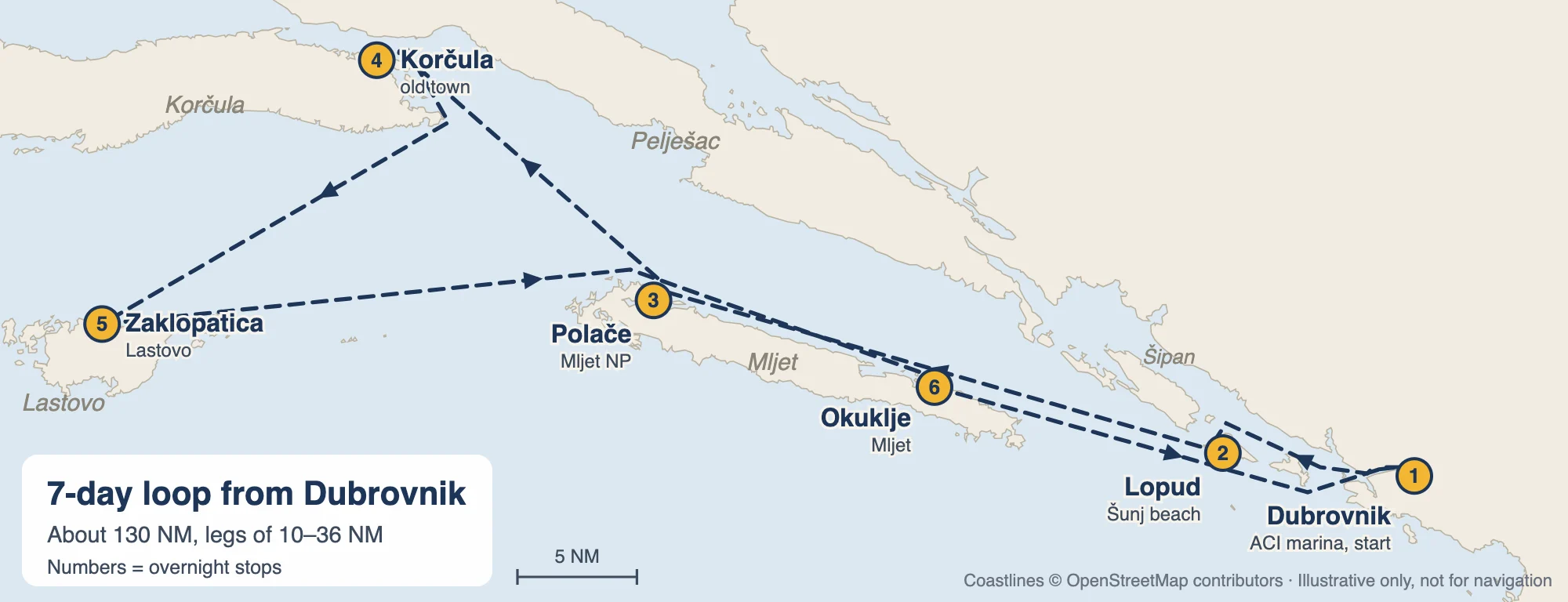
A 7-day sailing itinerary from Dubrovnik is a loop of about 130 nautical miles through Southern Dalmatia: Lopud in the Elaphite Islands, Polače in Mljet National Park, the walled town of Korčula, Zaklopatica on remote Lastovo, Okuklje on Mljet, and back to ACI Marina Dubrovnik. Five legs run from 10 to 25 NM; one, Lastovo to Mljet, is a full day of about 36 NM with the summer maestral behind you. Below you get the route day by day, the 2026 park fees, the moorings, what changes with the jugo, a shorter plan B and a one-way version to Split.
Key takeaways
- About 130 NM over 7 nights: Dubrovnik, Lopud, Mljet (Polače), Korčula, Lastovo (Zaklopatica), Mljet (Okuklje) and back.
- Mljet National Park charges boats €100 a day for 11 to 18 m in summer 2026 (€90 online), plus €30 per adult for the lakes.
- The south of Croatia sees the jugo more often than the north: keep north-facing harbours such as Zaklopatica and Okuklje in mind.
- Shorter plan B without Lastovo: about 100 NM with no leg over 28 NM.
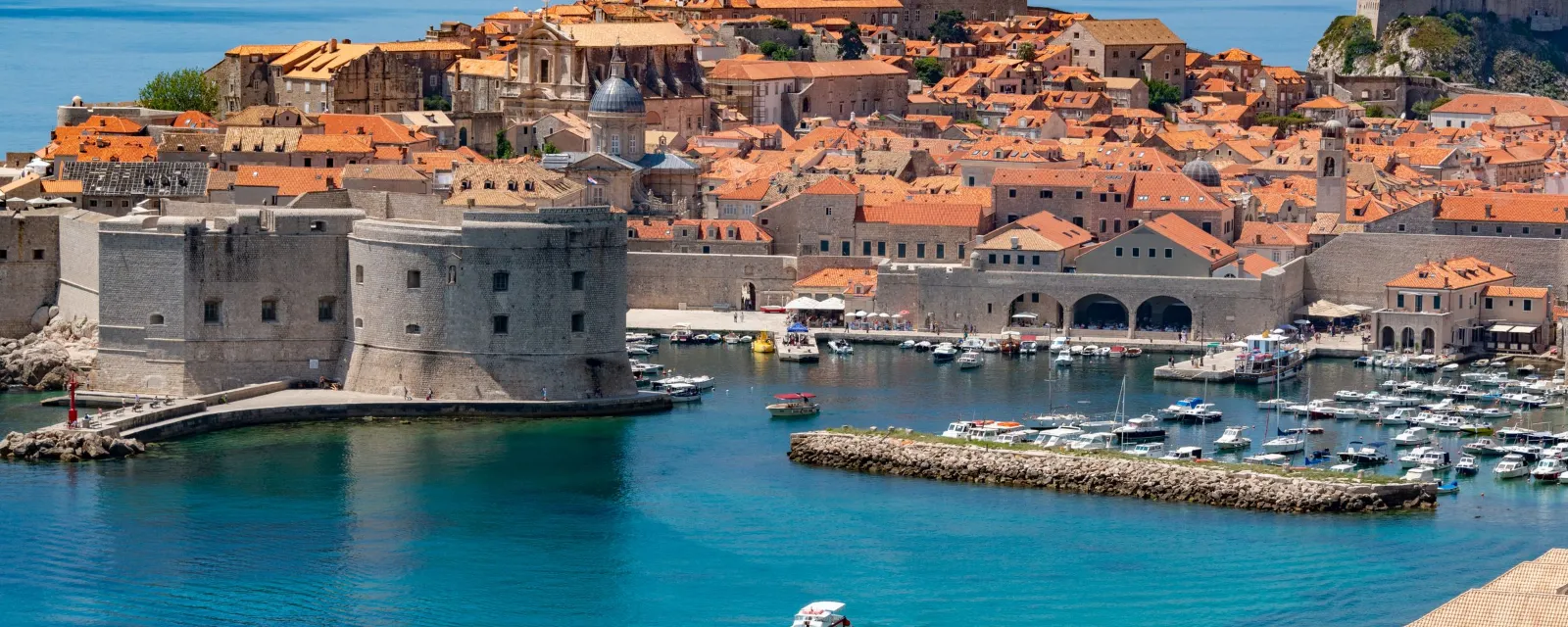
- Yachts cannot enter Dubrovnik’s old harbour; visit the old town by bus or taxi from the marina.
The route at a glance
| Day | Leg | Distance | Time | Overnight |
|---|---|---|---|---|
| Saturday | Check-in at ACI Marina Dubrovnik | Marina | ||
| Sunday | Dubrovnik to Lopud | 10 NM | about 2 h | Buoys or anchor |
| Monday | Lopud to Polače (Mljet) | 25 NM | about 5 h | Restaurant buoys or anchor |
| Tuesday | Polače to Korčula | 16 NM | about 3 to 3.5 h | ACI Korčula or town quay |
| Wednesday | Korčula to Zaklopatica (Lastovo) | 22 NM | about 4.5 h | Restaurant moorings or park buoys |
| Thursday | Lastovo to Okuklje (Mljet) | 36 NM | about 7 h | Quay or restaurant moorings |
| Friday | Okuklje to Dubrovnik, lunch at Koločep or Lopud | 21 NM | about 4 to 4.5 h | Marina |
Day by day
Saturday: check-in at ACI Marina Dubrovnik
Most Dubrovnik charters start at ACI Marina Dubrovnik in Komolac, at the head of the Rijeka Dubrovačka inlet, about 6 km from the old town walls and about 25 km from the airport. The marina has around 380 berths and is open all year. Boarding is usually from 3 pm. Use the afternoon to provision; the old town is a short bus ride away (lines 1A and 1B), as yachts are not allowed into the old harbour (Noonsite).
Sunday: Dubrovnik to Lopud (10 NM)
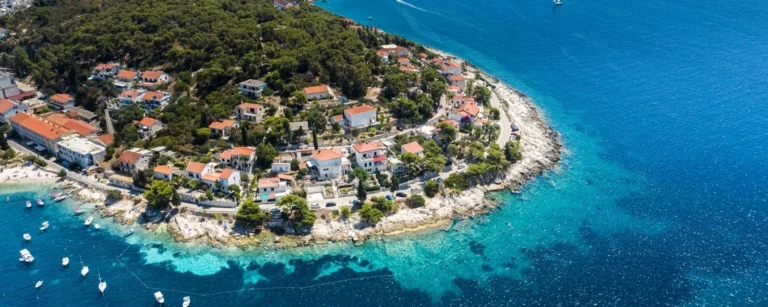
An easy first day down the inlet and out past Koločep to Lopud, the car-free middle island of the Elaphites. Leave the boat in the bay off Lopud village and walk 20 to 30 minutes across the island to Šunj, one of the few sandy beaches in Southern Dalmatia, with a shallow, gently sloping bottom. Šunj itself is a good lunch anchorage, sheltered from everything except the jugo.
Monday: Lopud to Polače, Mljet (25 NM)
Sail north-west along the Mljet channel, usually with the afternoon maestral on the nose or the beam, to Polače, a deep bay inside Mljet National Park with the ruins of a Roman palace on the waterfront and restaurants that offer buoys to diners. The park allows anchoring in Polače bay, Pomena and Tatinica, with a 5-knot limit within 150 m of the coast (Mljet National Park).
Tuesday: the Mljet lakes, then Korčula (16 NM)
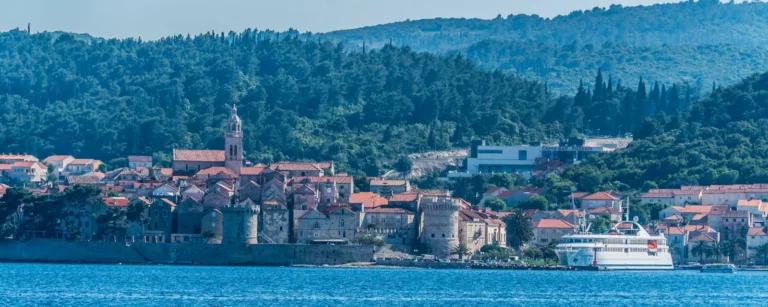
Spend the morning at the two saltwater lakes, Malo and Veliko Jezero, a few kilometres from Polače on foot, by bike or with the park’s transport. The visitor ticket includes a boat to St Mary’s islet, with its 12th-century Benedictine monastery. Then cross to Korčula, the walled town at the eastern tip of Korčula island, one of the most beautiful in the Adriatic. ACI Marina Korčula lies just south of the old town, with about 159 berths; book ahead in July and August.
Wednesday: Korčula to Zaklopatica, Lastovo (22 NM)
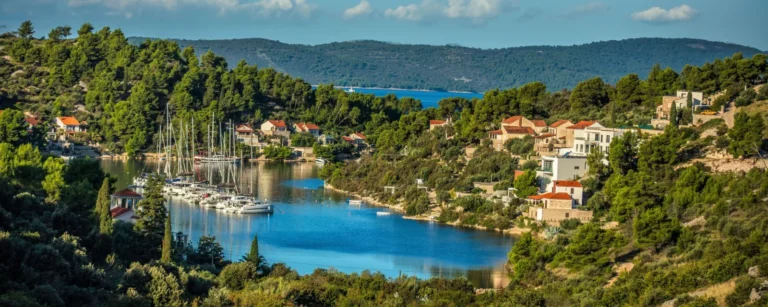
Round the eastern end of Korčula and head south-west to Lastovo, the most remote inhabited island group in Croatia and a nature park since 2006. Zaklopatica, on the north coast, is a small, well-protected bay with restaurant moorings. The park also runs official buoy fields at Saplun, Skrivena Luka, Škoj near Zaklopatica and Velo Lago, at €40 a night for a 10 to 20 m boat (Lastovo Islands Nature Park); a park ticket is also required. There is fuel in Ubli in season.
Thursday: Lastovo to Okuklje, Mljet (36 NM)
The long day of the week: leave early, cross back to Mljet and sail east along its north coast to Okuklje, a quiet, well-sheltered inlet near the eastern end of the island with a town quay and restaurant moorings. In a summer maestral (north-west), the wind is behind you for most of the way. The bottom is rocky and shallow in places, so approach slowly. If the forecast is poor or the crew wants a lazy day, use plan B below.
Friday: Okuklje to Dubrovnik (21 NM)
Head back through the Elaphites, with a swim and lunch at Koločep or Lopud, then up the inlet to the marina. Most bases ask you to be back by about 5 pm on Friday, refuelled, and to leave the boat by 9 am on Saturday.
Plan B and variations
- Shorter, without Lastovo (about 100 NM): Wednesday Korčula to Okuklje (28 NM), Thursday Okuklje to Šipanska Luka on Šipan (9 NM), Friday Šipan to Dubrovnik (15 NM).
- Ston and its oysters: from Korčula, sail east to Ston (about 33 NM), whose 14th-century walls run about 5.5 km over the hill. Then Ston to Šipan (12 NM) and back to Dubrovnik (15 NM).
- Cavtat: if you have a spare afternoon, Cavtat, south-east of Dubrovnik, is a pretty town quay about 12 to 13 NM from the marina.
Wind, weather and plan B
In summer the maestral blows from the north-west from late morning, peaks around 2 pm and fades in the evening (Ultra Sailing). The particular risk in the south is the jugo, the south-easterly: Croatian wind records show it becomes more frequent and stronger from north to south, with Dubrovnik among the most exposed stations (Lisac et al.). It builds over a day or two, brings swell and rain, and makes south-facing bays such as Šunj and Saplunara unsafe overnight. When it is forecast, stay on the north side of the islands: Zaklopatica, Okuklje, Šipanska Luka. Check the forecast every morning on meteo.hr or on Dubrovnik Radio’s VHF broadcasts; our guide Is it safe to sail in Croatia? explains the winds in detail.
Park fees and mooring costs
| Item | 2026 price |
|---|---|
| Mljet National Park, boat 11 to 17.99 m, June to September | €100 per day (€90 online), valid until noon the next day |
| Mljet National Park, boat 11 to 17.99 m, rest of the year | €50 per day |
| Mljet visitor ticket (lakes, St Mary’s islet), adult | €30 in summer, €20 otherwise; children €8 |
| Lastovo park buoy, 10 to 20 m | €40 per night |
| ACI Korčula, 39 ft monohull, peak season | about €128 per night (catamaran about double) |
Restaurant moorings in Polače, Zaklopatica and Okuklje are usually free if you eat there. For the full budget of a week, see our Croatia yacht charter cost guide.
One way: Dubrovnik to Split
Many charter companies offer one-way weeks between Dubrovnik and Split for an extra fee. Sailing north, you can follow our one-way route in reverse, about 120 NM: Šipan, Polače on Mljet, Lastovo, Vela Luka on Korčula, the Pakleni Islands off Hvar and Split. Note that heading north means sailing into the summer maestral. The map and the distances are in our 7-day sailing itinerary from Split.
Before you go
- Best months: June and September for warm water, steady breezes and space in the bays. See the best time to sail in Croatia.
- Licence: for bareboat, a recognised skipper licence plus a VHF radio certificate; otherwise hire a skipper.
- Getting to the marina: ACI Dubrovnik is about 30 minutes by road from the airport. With luggage and shopping, a pre-booked transfer or taxi is the simplest option.
- Boat choice: a catamaran is comfortable for families and for the long Lastovo legs; our catamaran charter guide compares prices.
- Checklist: our yacht charter checklist covers documents, the deposit and the check-in.
Recommended reading
- Adriatic Pilot (Imray, Trevor and Dinah Thompson, 9th edition, 2026): harbours, marinas and anchorages along the whole Croatian coast.
Links go to Amazon. As an Amazon Associate I earn from qualifying purchases.
Have two weeks? Our 2-week Croatia sailing itinerary links Split and Dubrovnik in one trip.
Starting from Dubrovnik? You can compare the boats based in Dubrovnik on SkipperCity, a Croatian charter specialist.
Frequently asked questions
How far can you sail in a week from Dubrovnik?
About 100 to 130 NM is comfortable. This loop covers about 130 NM with one long day; the plan B without Lastovo covers about 100 NM.
Can you moor a yacht in Dubrovnik old town?
No. Yachts are not allowed in the old walled harbour. Charter boats use ACI Marina Dubrovnik in Komolac or Gruž port, and you reach the old town by bus or taxi.
How much does it cost to visit Mljet National Park by boat?
In summer 2026, €100 a day for a boat of 11 to 17.99 m (€90 online), plus €30 per adult for the lakes and St Mary’s islet. Prices are lower from October to May.
Is Dubrovnik a good base for a first sailing holiday?
Yes, with care: the Elaphites are short hops, but Mljet and Lastovo involve longer legs, and the jugo is more frequent in the south. A skipper for the week or the shorter plan B makes it easier.
Can you sail one way from Dubrovnik to Split?
Yes. Many companies offer one-way charters for an extra fee. The route via Šipan, Mljet, Lastovo, Korčula and Hvar covers about 120 NM, mostly into the summer maestral.